Church & Worship AV
Affordable Professional Audio for Small North Georgia Churches
Key Takeaways
- Vocal clarity, not volume, is the real goal of a small sanctuary sound system.
- Wired microphones cost less and fail less often than budget wireless systems, especially at the pulpit where the mic rarely moves.
- Powered speakers with a built-in amplifier simplify the signal chain and cut down on equipment clutter in a small booth.
- A system a volunteer can’t operate confidently is a wasted investment, no matter how good the specs are.
- Building the system in phases over two or three years is a realistic path to a professional-sounding room without a single big-bang budget hit.
Big Room Sound Doesn’t Require a Big Room Budget
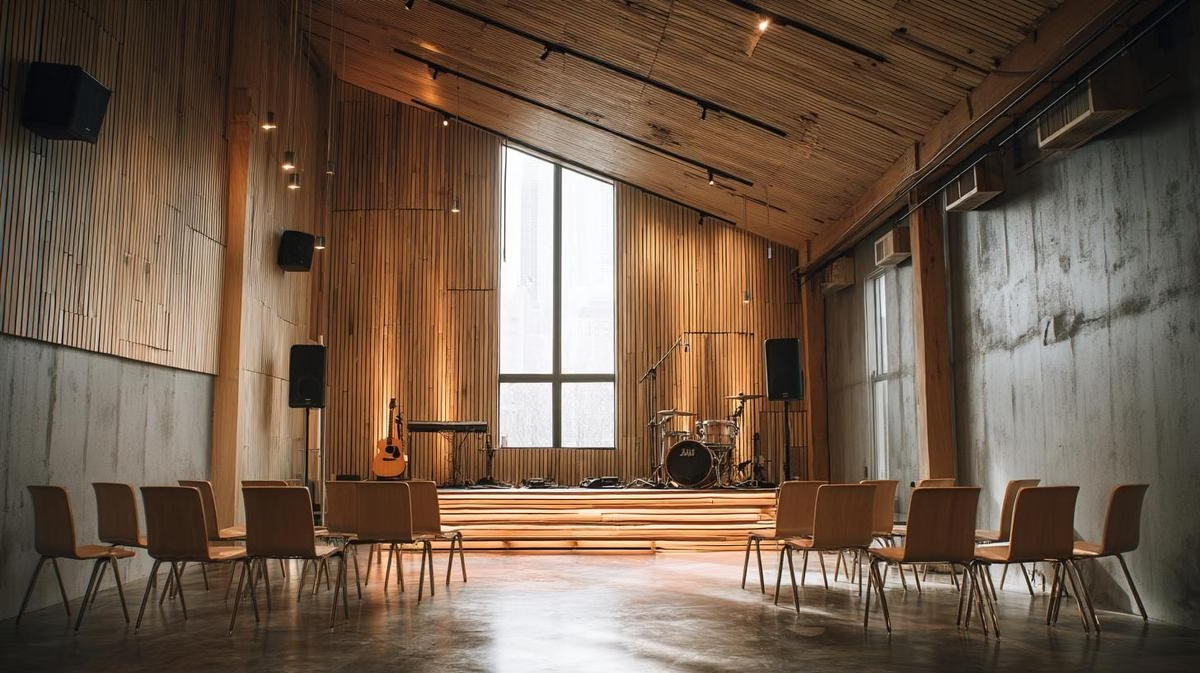
This is for churches with 50 to 150 members whose current sound system is working against them: the sermon is hard to hear, the worship team fights the stage monitors, and last year’s budget-friendly gear is already falling short. Most tech volunteers at this size assume professional audio means a five-figure budget. It doesn’t. A small sanctuary needs the right three pieces of gear in the right order, not a bigger check.
Fix the Fundamentals Before You Add Features
The problem usually isn’t money or talent. It’s that churches get sold complexity before they’ve fixed the basics. Buying a feature-heavy digital board before fixing gain staging or speaker placement gets the order of operations backward, and it’s an expensive mistake to make. In a small room, the acoustics of the space are the real obstacle; no amount of gear fixes bad speaker placement. If the pastor’s voice is buried under drums and guitar, the system has become a barrier to worship instead of a tool for it.
Wired Mics and Powered Speakers: the Practical Short List
Good stewardship starts with gear that earns its cost. High-quality wired microphones for the pulpit and any stationary worship leader cost a fraction of mid-tier wireless systems and prove more reliable, since wireless is prone to interference in a room full of phones and WiFi. Powered speakers, with the amplifier built in, give you a shorter signal chain, one that’s easier for a non-technical volunteer to maintain and troubleshoot. A basic wired mic runs $100-$300. A solid pair of powered speakers usually lands between $600-$1,800 each, and a compact digital mixer suited to this scale runs $500-$2,000. That combination gets a small sanctuary to genuine vocal clarity without an enterprise price tag.
Set the Board So a Volunteer Can Run It Without Fear
A sound system is only as good as the person running it on Sunday morning. Getting the best results from a volunteer operator means simplifying both the workflow and the physical booth: trim the controls down to what actually matters, gain, basic EQ, and volume. Solid training on feedback prevention and a quick soundcheck routine does more for a service than another piece of new hardware ever will. A volunteer who feels confident stays at the booth. One who’s guessing every week eventually doesn’t.
Growing the System in Phases Instead of All at Once
Big sound in a small space comes down to intentional sequencing, not a bigger check. Start with a core equipment list and build out in phases over two or three years; that protects your current investment while leaving room to add streaming integration or hearing assistance down the line. It’s the price-conscious approach we’d recommend for any small sanctuary at this scale. If your congregation eventually outgrows this scale, our guide to North Georgia church sound system costs covers what the next tier up actually runs, and our broader church audio cost guide breaks it down across sanctuary sizes.
Whatever size your sanctuary is, book a free consultation and we’ll help you build a system that fits your room and your budget, not someone else’s.