Audio Systems
Sound absorption
Sound absorption for conference rooms, offices, and studios: we clap-test the room and mark exactly where the echo comes from before recommending panels.
- Acoustic panels
- Ceiling baffles and clouds
- Bass traps
- Soundproofing materials
- On-site acoustic assessment
Sound absorption for conference rooms, offices, and studios
DCMM installs sound absorption for conference rooms, open offices, and studios: acoustic wall panels, ceiling clouds and baffles, and bass traps, each placed where the room’s echo actually lives. Before recommending anything, we clap-test the room and mark exactly where sound is bouncing.
You can hear the problem in the first ten seconds of a normal meeting. A voice bounces off the glass wall and lands back on the table a half-beat late. Somebody in the back repeats themselves. Somebody near the door gives up and waits for the room to settle. Glass walls, hard floors, and open ceilings photograph well, and they bounce every syllable around the room twice before anyone hears it clearly.
We walk it once and mark where each treatment goes
We start with a clap, not a meter. Standing at one end of the room, we clap and walk the perimeter, marking every spot where the echo comes back instead of dying out. Those marks decide where treatment goes, not a standard layout pulled off a shelf.
Panels and baffles built for the room
- Wall panels, fabric-covered or perforated, go up at the first reflection point beside each seat
- Ceiling clouds cover open stretches where the flutter runs floor to ceiling with nothing overhead to interrupt it
- Bass traps sit in the corners, since low frequency piles up there no matter what’s on the walls
Materials matched to the problem
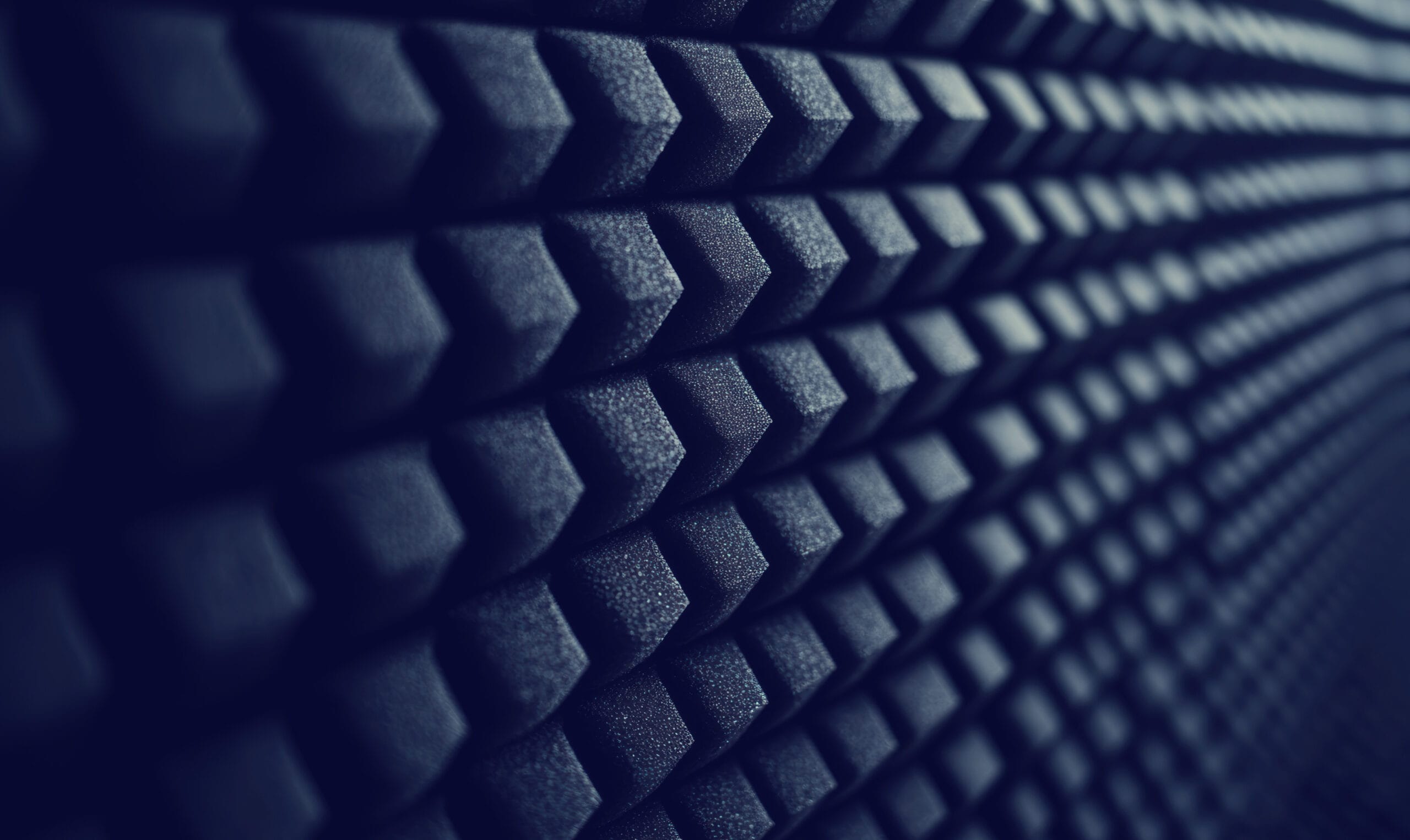
- Wedge and egg-crate foam where the room’s a studio or control room
- Mass-loaded vinyl and acoustic insulation where sound needs to stop at the wall instead of getting quieter
- Finishes picked to match the room, without announcing that acoustic work happened
- Panel placement follows the clap-test marks, not the wall that’s easiest to reach with a ladder
Assessment and post-install verification
- On-site clap-test assessment that marks exactly where sound is bouncing before any panel gets ordered
- Panel count and placement drawn from those marks, instead of a standard kit sized to square footage
- A second clap-test after install, at the same marked spots, to confirm the echo is gone
A conference room and an open floor fail the clap test for different reasons, but the fix comes from the same walkthrough: mark where the sound bounces, treat that spot, test it again. The room stays quiet enough that the person at the far end of the table stops asking you to repeat yourself.
Related services
Next step
Get a plan, not a pitch
Book a free consultation and walk away with clear next steps, whether you build with us or not.