Church & Worship AV
Exploring PTZ Cameras vs Fixed Cameras for Church Streaming
Key Takeaways
- A single volunteer can run multiple PTZ (pan-tilt-zoom) cameras from one joystick, which matters more than the “cool factor” for a small tech team.
- Fixed cameras often deliver a better sensor and low-light performance per dollar, but can’t move during the service.
- A hybrid setup, one wide fixed camera plus two PTZ units, gives a safety shot and moving coverage at the same time.
- Low-light performance and optical zoom matter more than 4K resolution for most sanctuaries.
- PoE (Power over Ethernet) lets one cable carry video, power, and control, which simplifies installation and scaling.
The Movement Debate: PTZ vs. Fixed
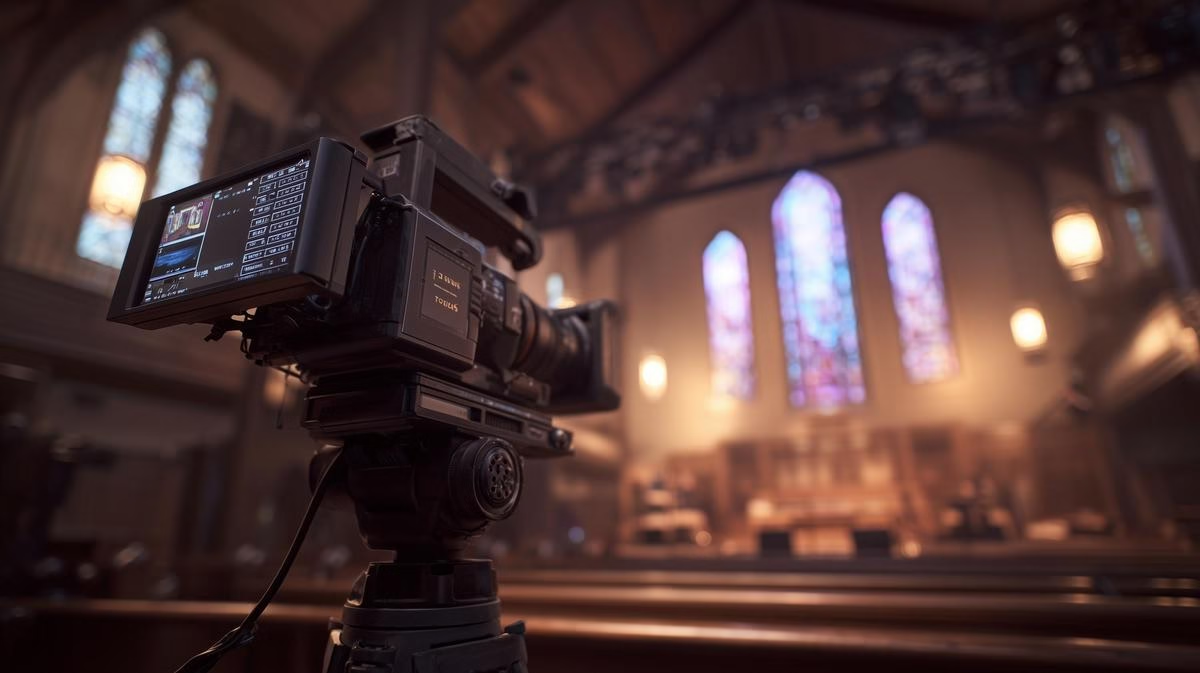
Choosing between PTZ and fixed cameras isn’t about the cool factor of remote control. It’s about how the tech team actually functions on a Sunday morning. A PTZ (pan-tilt-zoom) camera stays mounted in place but lets one person move the shot remotely, which matters most for churches running lean on volunteers. One person in the booth can swing between the pulpit, the worship leader, and the baptistry without leaving the chair. Fixed cameras trade that flexibility for reliability. They can’t follow a pastor pacing the stage, but they also remove the risk of a jerky, amateur-looking camera move mid-sermon.
Budgeting Past the Sticker Price
Comparing budget-friendly streaming options means looking past the unit cost. A solid fixed camera runs around $800; a comparable PTZ unit starts closer to $1,500. But a PTZ camera also needs a joystick controller or software to run it. Buy three fixed cameras, and three volunteers need to stand behind them, or the shot list is stuck at three static angles all service. Looking at total cost of ownership changes the math: for a mid-sized sanctuary, two PTZ cameras often costs less overall than a full production crew standing behind a row of tripods in the middle of the seating.
Covering the Service: Shots That Actually Matter
The goal is an intimate, front-row experience for remote viewers. Fixed cameras are the wide safety shot, the full view of the stage to cut back to if anything goes wrong. PTZ cameras handle the rest: a close-up during the sermon, a pan to the worship band during a bridge. Preset camera positions mean a volunteer doesn’t need to be an expert at manual tracking. They hit a button, and the camera moves to the pulpit the same way every time.
Technical Specs That Impact Sunday Morning
4K marketing is a distraction for most churches. YouTube and Facebook cap most broadcasts at 1080p, so bandwidth is better spent on a strong 1080p signal than a compressed 4K one. Low-light performance is the spec that actually matters. Most sanctuaries run moody, traditional lighting that looks dark to a camera sensor. A larger sensor and real optical zoom, not digital zoom, which just crops the image into a pixelated mess, is worth paying for. Every camera should run on a hardwired connection, SDI or NDI, for a clean, lag-free signal to the switcher.
Installation and Scaling for the Long Term
Installation is the last hurdle. DIY streaming setups are possible with basic tools, but ceiling-mounted or wall-mounted cameras need real cable management and power planning. Many PTZ cameras now run on PoE (Power over Ethernet), so one cable carries video, power, and control. That simplifies the infrastructure and makes the system easier to scale: adding another camera later means adding a node to the NDI network, not re-wiring the booth.
Fixed cameras and PTZ units solve different problems, and most sanctuaries end up running both. For the audio side of the same budget conversation, see our guide to the 60/30/10 broadcast budget split. If a camera upgrade is one piece of a bigger streaming problem, our live stream troubleshooting guide covers the rest. Ready to plan a camera system your volunteers can actually run? Book a free consultation and we’ll design around your room and your team.