AV & Technology
How Office Sound Masking Works
Key Takeaways
- Sound masking doesn’t block noise the way soundproofing does. It adds a steady background sound that makes speech harder to make out past a few feet.
- Offices use pink noise, not plain white noise, because pink noise weights toward lower frequencies and wears less on the ear over a full workday.
- Active systems (ceiling or wall speakers) give precise, zoned control. Passive treatment like acoustic panels reduces noise but doesn’t mask it.
- A system tuned too loud becomes its own distraction. Correct calibration matters more than which brand of speaker is on the ceiling.
- Retrofitting sound masking into an existing office works around a drop ceiling in most cases and isn’t a construction project.
If your open office sounds more like a coffee shop than a place to concentrate, that’s not a layout problem you can fix with better partitions. It’s an acoustics problem, and sound masking solves a different piece of it than most people assume. Here’s what the technology actually does and how it’s delivered.
How Sound Masking Actually Works
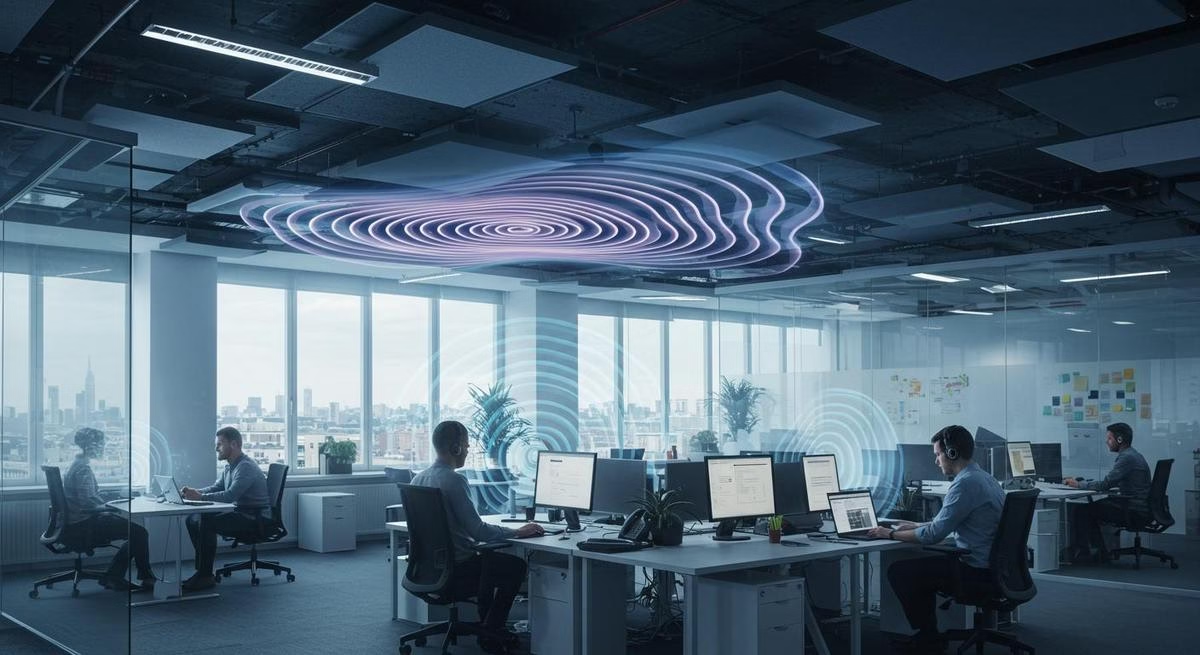
Sound masking doesn’t reduce noise. It changes how your brain processes the noise that’s already there. A steady, engineered background sound raises the ambient noise floor just enough that speech from two desks over loses its clarity before it reaches you. You still hear that someone’s talking. You stop being able to make out what they’re saying, which is what actually breaks your concentration. That’s the whole mechanism: cover speech intelligibility, not eliminate sound.
Why Pink Noise, Not White Noise
White noise carries equal energy across every frequency, which is why it sounds harsh, closer to static than to airflow. Pink noise weights energy toward the lower frequencies and rolls off the highs, which is closer to how we perceive natural background sound and easier to sit next to for eight hours. Most commercial systems run a shaped version of pink noise, tuned to the specific frequency range human speech occupies, rather than a generic pink-noise track. That tuning is the difference between a system that quietly does its job and a desk fan that’s just adding more noise to the room.
Active vs Passive Masking
Passive treatment, acoustic panels, ceiling baffles, soft furnishings, absorbs sound energy and reduces echo. It helps, but it doesn’t mask speech; a room can be fully treated with panels and still carry a conversation clearly across an open floor. Active masking adds sound through speakers, usually mounted above the ceiling tile or on the wall, and gives you control over level and coverage by zone. A lobby can run louder masking than a quiet meeting room a few feet away. Most commercial installs use active systems for that reason: precision beats absorption alone in an open layout.
Where Masking Is Delivered From
Ceiling-mounted speakers are the standard for offices with a drop ceiling, since the tile hides the hardware and the sound distributes evenly overhead. Where there’s no drop ceiling, wall-mounted units cover the same function without the overhead install. Wireless systems have gotten more common because they skip the wiring run, though a wired system stays more consistent if the building’s Wi-Fi gets crowded.
Calibration: The Part Most Installs Get Wrong
A masking system set too loud becomes the distraction it was meant to solve. Set too quiet, it does nothing. The right level is the one people stop noticing within a few minutes of sitting down, not the one that sounds impressive during a demo. That’s a tuning problem more than an equipment problem, and it’s why a system with good hardware but poor calibration still gets complaints.
Retrofitting an Existing Office
Adding masking to a space that’s already built out follows the same logic as designing it from scratch: absorb what you can with materials, block what you can with layout and partitions, and cover the rest with masking sound. Most drop-ceiling offices can be retrofitted without touching drywall. Spaces without one need a wall-mounted or freestanding option instead of a ceiling grid.
Choosing a Starting Point
Not every space needs the same coverage. A large open floor with rows of desks needs different zoning than a row of private offices along a corridor. If you’re past the “how does this work” question and into comparing system types, coverage levels, and cost per square foot, see our guide on sound masking systems and what they cost.
How We Approach It
We walk the space first to find where sound actually travels, before recommending equipment. A masking plan built from a room’s real layout holds up better than one built from a floor plan alone.
We handle office sound masking as part of broader corporate office acoustics work, since masking rarely solves a noise problem on its own; it usually pairs with some absorption in the rooms where echo is the bigger issue.
If open-office noise is costing your team focus, book a free consultation and we’ll assess what your space actually needs.