Church & Worship AV
Hybrid Church Models: Balancing In-Person and Online Worship
Key Takeaways
- Hybrid worship isn’t a pandemic leftover; for most churches it’s now a permanent front door for first-time visitors.
- A hybrid service needs to acknowledge the online audience directly, not just point a camera at the room.
- Audio is the bridge: a dedicated broadcast mix matters more to online viewers than camera quality does.
- A chat host turns passive viewers into participants through prayer requests and real conversation.
- Recruiting specific volunteers for digital roles, camera operators, chat hosts, stream techs, keeps the load from landing on the same overworked staff.
Most churches that stream did not set out to build a second congregation. A camera went up in the back of the room during a season when it had to, and it never came back down. That leftover setup is worth a second look, because for a lot of churches the online service is now a permanent front door, not a backup plan. Here’s what separates a hybrid model that actually works from a camera that just happens to be pointed at the stage.
What Exactly Is a Hybrid Worship Service?
For a lot of churches, “hybrid” just means a camera in the back of the room. A real hybrid worship service is more intentional than that: the online congregation gets the same care and planning as the people in the pews. That’s a shift from a surveillance mindset, where remote viewers peek in from a distance, to a ministry mindset, where they’re active participants. The digital campus is often the largest outreach a church has, connecting the sick, the traveling, and the unchurched before they ever walk through the front door.
What Technology Do You Actually Need?
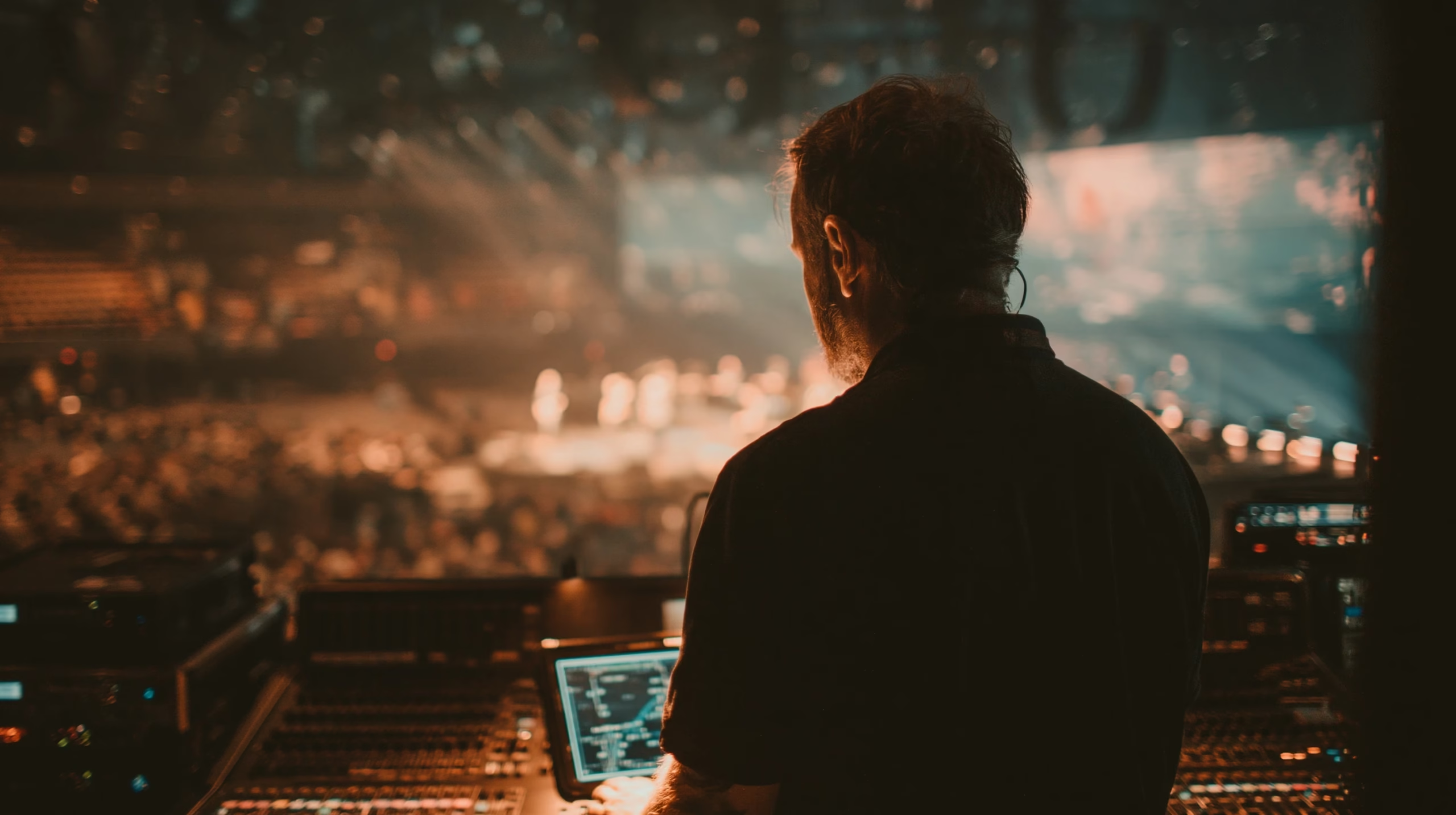
A digital campus needs a real foundation, not a TV studio. Audio comes first, same as everywhere else in church tech. A hollow, echoey room feed loses online viewers fast, so a digital mixer that supports a separate broadcast mix is worth the investment before anything else. On the video side, static cameras kill engagement. A PTZ camera setup creates close, personal shots that make a remote viewer feel like they’re sitting in the front row instead of watching through a window. And the connection has to be wired: WiFi is not an option for a live broadcast that can’t afford to buffer during the sermon.
Keeping Remote Engagement From Feeling Like Netflix
The real danger of online church is passivity: a remote congregation slipping into consumer mode and watching the service the way they’d watch anything else on a screen. Closing that gap starts with the pastor. Looking directly into the camera lens when welcoming people or giving the benediction creates real eye contact with the viewer. Beyond that, a dedicated chat host, a volunteer whose only job is welcoming online guests, taking prayer requests, and keeping the conversation going, turns a broadcast into an actual gathering.
The Honest Drawbacks: Is Virtual Real Church?
Virtual attendance can’t replicate a handshake, corporate singing, or sharing communion in person. That tension is real, not something to paper over. But the goal of hybrid worship isn’t replacing the physical gathering, it’s extending it. For the single parent working a Sunday shift or the homebound member who can’t make the drive, the online service is a lifeline, not a luxury. The ongoing work is using that platform to keep inviting people into deeper, eventually in-person, community.
Building a Sustainable Strategy for the Long Haul
A lot of churches are running hybrid services on adrenaline, and that is not a strategy. It is a fast track to burnout. Church management software that tracks both in-person and online attendance gives leadership a full picture of the church’s health in one place. Automated giving keeps tithing simple across both groups instead of doubling the admin work. Most of all, stop asking existing staff to simply do more. Recruiting and training specific volunteers for digital roles, camera operators, chat hosts, stream techs, spreads the load instead of concentrating it on one exhausted person.
A hybrid model works when the online congregation gets treated as a real audience, not an afterthought behind the last pew. If burnout is the bigger issue right now, our guide to training a volunteer tech team covers building a rotation that lasts. For a plan that fits your house of worship specifically, book a free consultation and we’ll help you figure out what to build first.