Security
Do Burglars Avoid Homes With Security Cameras? Real Data
Key Takeaways
- A University of North Carolina at Charlotte survey of convicted burglars found 60% said a visible camera would push them toward a different target.
- Visible, working cameras deter more than hidden ones; most burglars scout a property before they commit to it.
- Fake cameras and dummy signs help a little, but an experienced burglar often spots the difference on a second look.
- Motion-triggered lights, an audible alarm, and clear sightlines add more deterrence than a camera by itself.
- Doorbell cameras cover the front door well; full coverage of doors, windows, and the garage stops more attempts.
- Two-way talk and clear night footage matter more for both deterrence and evidence than brand name or price.
Do burglars actually skip houses with cameras, or is that just something camera brands say to sell more cameras? The honest answer is mostly yes, with real conditions attached. A camera bolted on as an afterthought doesn’t change much. A visible, working system that a burglar notices during the walk-up changes the math for most of them. Here’s what the research says, what drives that decision, and where cameras alone fall short.
Do Security Cameras Actually Deter Burglars?
Yes, for most burglars, and there’s a real study behind that answer. Researchers at the University of North Carolina at Charlotte surveyed convicted burglars and found 60% said the presence of a camera would make them look for a different target. Cameras work on burglars the same way a locked door works on most people: not impossible to get past, just not worth the effort when an easier option exists nearby.
That number isn’t universal. Some burglars are experienced enough to spot a fake camera or a cheap one and proceed anyway. Doorbell cameras cover the one spot most visitors and most burglars actually use, the front door, but a full system covering doors, windows, and the garage closes more of the property than a single camera can.
What Makes a Camera Setup Effective at Deterrence
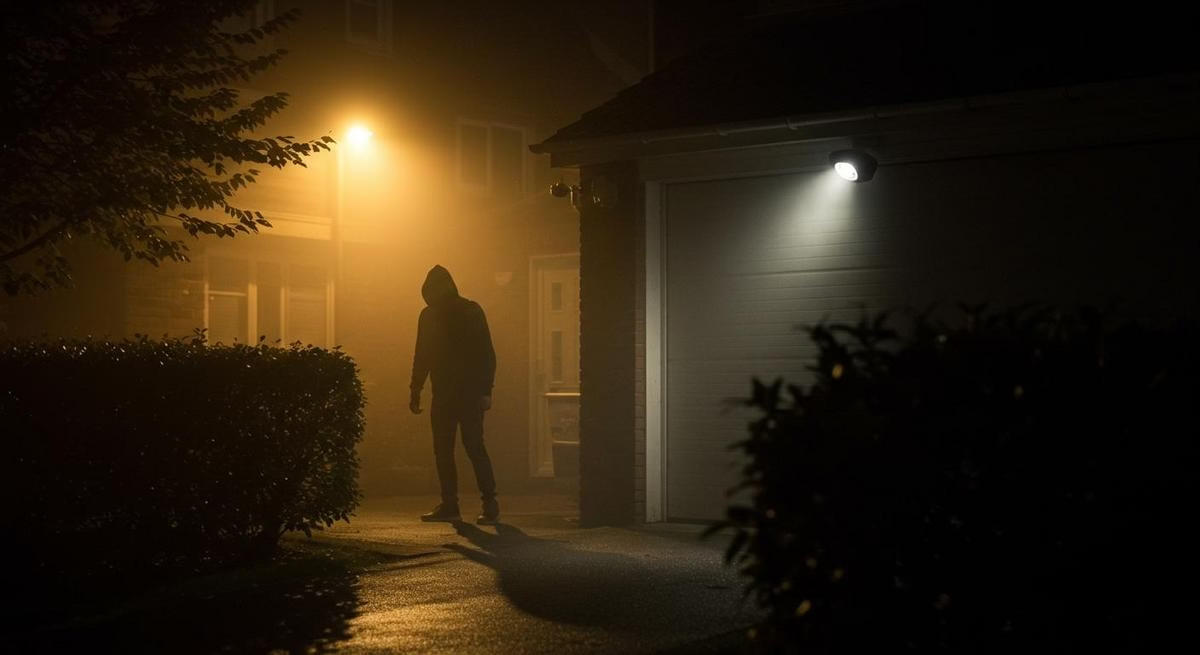
Visibility does more work than most homeowners expect. A camera a burglar can see during a walk-up reads as a risk before they’ve committed to anything. A hidden camera might catch better footage after the fact, but it does nothing to stop the attempt in the first place.
Placement follows the same logic as any other security layout: doors, windows, garage paths, and the driveway are the spots that matter most, since that’s where someone has to slow down and be seen. Add a light above each camera; a well-lit camera catches faces and plates instead of dark shapes. Motion-triggered lights and an audible alarm add pressure a static camera can’t; a triggered light or siren interrupts an attempt in progress instead of just recording it. At night, infrared coverage matters because a camera without it produces footage too dark to identify anyone.
Are Fake Cameras and Dummy Signs Worth It?
Some deterrence, but not much. Burglars who scout a property look for the details real gear has and fake gear usually lacks: status lights, actual wiring, and small motion cues most dummy units don’t replicate. A working camera signals that someone is paying attention. A wireless camera suggests a homeowner who checks a phone app; a wired system suggests longer-term planning, since it took more than an afternoon to put in.
Camera quality shows up in the footage, not just the deterrence. A cheap camera with a bad angle produces blurry, low-value footage even when it does its job of scaring someone off before anything got taken. Two-way talk features add another layer; a voice through the speaker letting an intruder know they’re being watched changes the calculation faster than a silent light.
Beyond Cameras: What Else Actually Helps
Cameras work better as part of a layout than on their own. Loud alarms, bright lighting, and a dog in the house all add friction a burglar has to weigh before trying anything. Trimmed shrubs around windows and entry points remove the cover a burglar would otherwise use to work unseen. Door and window sensors, especially on ground-floor and upstairs windows people forget to check, close gaps a camera alone won’t catch. Posted signs for cameras and alarms add one more reason to move to the next house.
Should You Install Cameras Yourself or Hire a Pro?
For a single house, a well-planned DIY kit or a local installer can usually cover what matters: the doors, the driveway, and the garage, following the placement rules in our camera placement guide. The gap DIY kits usually leave isn’t the gear, it’s coverage: a missed side door or a window nobody thought to wire.
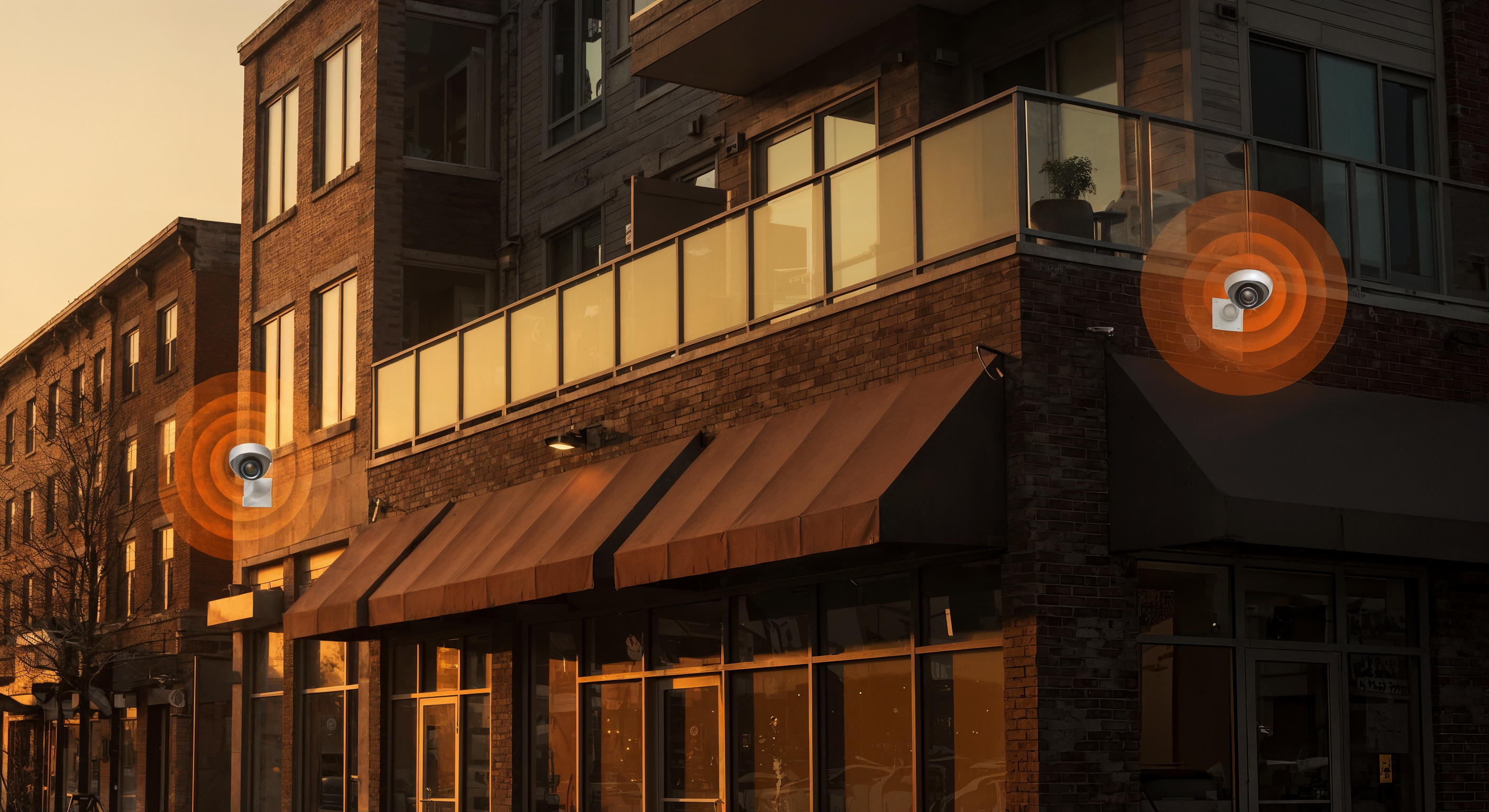
If what you’re weighing is coverage for a business, a rental property, or a building with more than one tenant, that’s the layout work we handle, and it uses the same deterrence principles at a larger scale. For the bigger question of whether any of this is worth the investment for your situation, see our decision framework for home security.
Cameras deter most burglars, but only the kind that get noticed and work when it counts. If a commercial property is what you’re securing, book a free consultation and we’ll plan the coverage with you.