Church & Worship AV
Megachurch AV & Streaming Solutions for Atlanta (500-5,000 Seats)
Key Takeaways
- One integrator designs audio, camera, lighting, and streaming as a single system, not stitched-together vendor quotes
- Broadcast-quality video means PTZ cameras, switchers, and IMAG screens, not a phone camera pointed at the stage
- Multi-platform streaming to Facebook, YouTube, and an in-house player needs dual encoders, a load-balanced CDN, and a wired uplink
- Line array speakers and acoustic treatment fix echo and dead spots that a bigger amplifier can’t
- In-ear monitors and confidence screens keep the platform team on pitch and on script without turning to check a screen
- Tablet-based control and volunteer training matter as much as the gear list; a system nobody can run isn’t finished
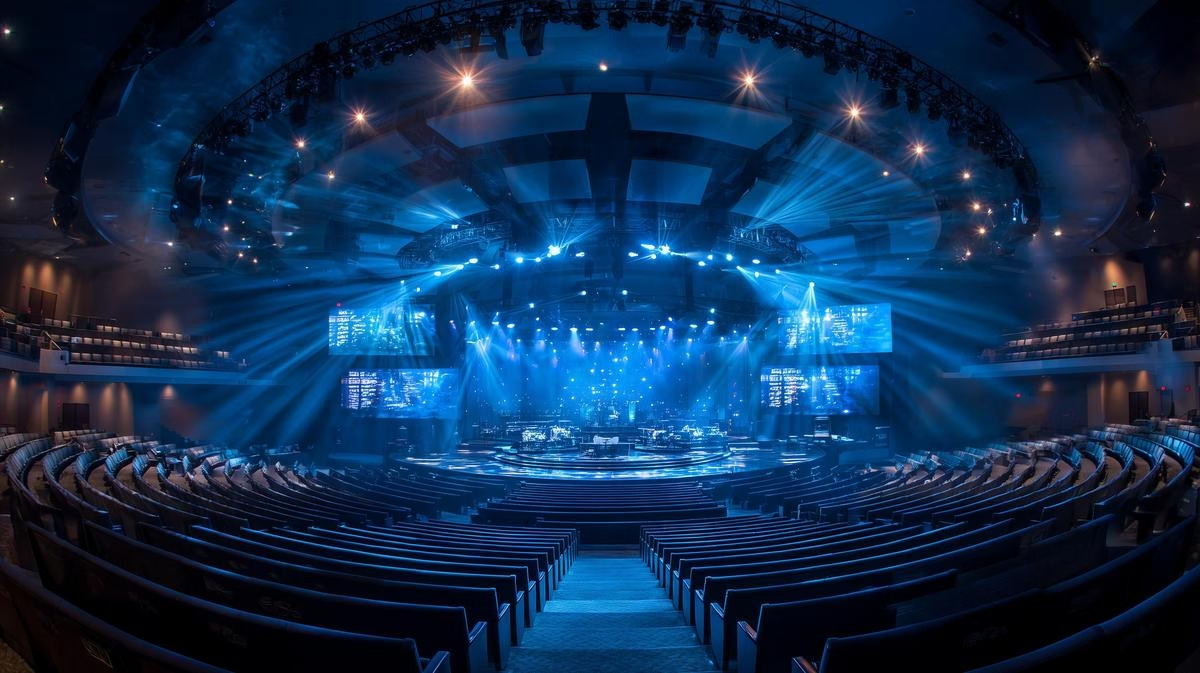
A megachurch seating 500 to 5,000 people runs on a different scale of AV than a single-room sanctuary, and systems that work fine at 200 seats usually buckle well before 2,000. Bad sound, rough lighting, and a stream that drops mid-sermon turn a service people traveled to attend into something they watch through buffering. Here’s what a complete system looks like at that scale: sound, video, streaming, lighting, and the control layer that ties them together.
What Does a Complete AV System Look Like for an Atlanta Megachurch?
A large sanctuary needs more than loud sound and a bright screen. People in row sixty need to hear clearly, not just loudly, and they need a sightline to the stage from wherever the ushers seated them.
Scalable AV means the system installed for a 1,200-seat sanctuary today doesn’t get torn out when the church adds a second service or a video venue next year. See how this fits into AV design for houses of worship more broadly before the gear specifics below. We design audio, camera, and lighting as one system rather than three vendor quotes stitched together after the fact, because a mismatch between a lighting rig and a camera’s dynamic range shows up on screen even when nobody in the room notices it.
Broadcast-Quality Camera and Video Systems
A broadcast-ready setup runs on PTZ cameras, video switchers, and IMAG screens, tools built for this job in a way a phone camera on a tripod isn’t. PTZ units hold a tight, steady zoom in low light that a phone sensor can’t match, and a switcher lets one operator cut between angles live instead of picking a single static shot for the whole service.
Camera placement and cutting decisions carry weight too. A wide shot for a worship set and a tight shot for a sermon read differently, and cuts timed to the beat of the music or the pause in a sentence feel intentional instead of random. We train the volunteer running the switcher on when to cut, not just how, because the difference between a broadcast that feels produced and one that feels like a security camera is mostly timing.
Multi-Platform Streaming Infrastructure
Streaming to Facebook, YouTube, and an in-house player at the same time takes more than one camera and an upload. Dual encoders and a load-balanced CDN keep one platform’s hiccup from taking down the others, and a fiber-backed uplink handles bandwidth a wireless connection can’t hold steady for ninety minutes straight.
If a stream stutters, the upload connection is usually the problem, not the volunteer running the switcher. A backup kit and a mapped signal path mean a failed cable gets swapped in under a minute instead of turning into five minutes of dead air while someone traces the run, and every cable, encoder, and port gets tested ahead of a service, not discovered mid-stream. Captions matter too, whether generated automatically or written by a person, depending on how exact the church needs them.
Sound System Design and Acoustic Treatment
Echo, dead spots, and uneven coverage in a large room don’t get fixed with a bigger amplifier. They get fixed by placing speakers for how the room actually behaves. No two sanctuaries need the same array, because no two sanctuaries share the same ceiling height, wall material, or seating layout.
Line array speakers fill a large room front to back more evenly than point-source cabinets, and soft wall treatment tames the harsh reflections a hard-surfaced sanctuary throws back at the congregation. LED walls hold color and contrast in a bright room better than a projector does, which matters more than it sounds like it should when half the congregation is watching under stage lighting instead of in the dark.
In-ear monitors keep the platform team on pitch without a wall of floor wedges adding to the room’s noise floor, and confidence screens near the platform mean a pastor reading notes doesn’t lose their place or squint at a screen thirty feet away.
Integrated Control Systems and Volunteer Training
Running sound, lights, and video from a single tablet interface means one volunteer isn’t juggling three separate control surfaces mid-service. Presets, named zones, and a control room laid out for one-screen operation turn a Sunday morning into something a trained volunteer can run without a technician standing behind them.
That starts with cable and network infrastructure built for the load, not retrofitted after a wireless mic starts dropping out during announcements. We train crews who’ve never touched a router before, because most volunteer AV teams start there. Get the layout right, and the gear stops fighting the operator.
Is Your System Built for Where the Church Is Headed?
You now have the shape of what AV takes at megachurch scale: sound built for the room, video that reads as broadcast instead of a livestream of a livestream, a streaming setup that doesn’t drop mid-sermon, and controls a volunteer can run alone. None of it works stitched together from vendors who’ve never seen each other’s spec sheets.
For the audio design specifics behind a system like this, see what a megachurch sound system actually needs. If you want a walkthrough of your sanctuary before committing to a system, book a free consultation.