Church & Worship AV
Key Components of Megachurch Audio System Design
Key Takeaways
- A megachurch sound system rests on five components: mixer, amplifiers, speakers, microphones, and signal processors
- Acoustic treatment shapes sound instead of blocking it; soft panels and room modeling beat trial and error
- Line arrays with delay towers give large sanctuaries even coverage; point-source speakers cause echo and dead spots in big rooms
- A choir section that sounds thin or missing is usually a phase or calibration problem, not a gear problem
- Livestream audio needs its own mix, separate from the room mix, or the stream sounds worse than the room feels
- Scalable design means building in extra zones and routing capacity before the church needs them, not after
A megachurch sound system has to do more than get loud. It has to carry every word, note, and prayer to the back row and the livestream at the same time. Bad sound is what people remember about a service, whether they can name the problem or not. Here’s what goes into a system that holds up: the core gear, how the room gets treated, why big rooms need line arrays instead of point-source speakers, and how to design one the church won’t outgrow.
What Are the Core Components of a Megachurch Sound System?
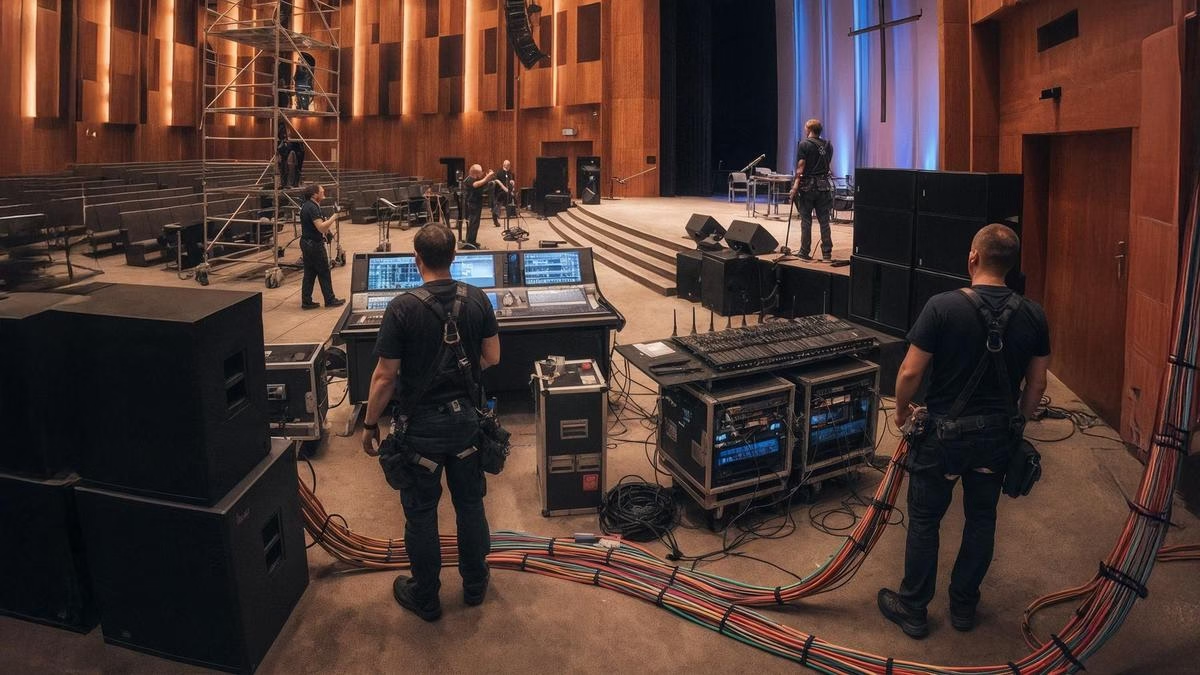
A megachurch sound system starts with five things: a mixer, amplifiers, speakers, microphones, and signal processors. Everything else, line array versus point-source, digital versus analog, gets decided on top of that base.
Each part does one job. The mixer routes and shapes every signal coming off the stage. Amps drive the speakers hard enough to fill a few thousand seats without clipping. Processors correct what the room does wrong, ringing frequencies, uneven coverage, before the signal reaches a listener. Skip the processing chain to save budget, and even good speakers end up sounding worse than they should.
How Do You Treat Acoustics Without Blowing the Budget?
Echo turns clear words into mush and makes music sound harsh. It’s the first thing to fix, and usually the cheapest.
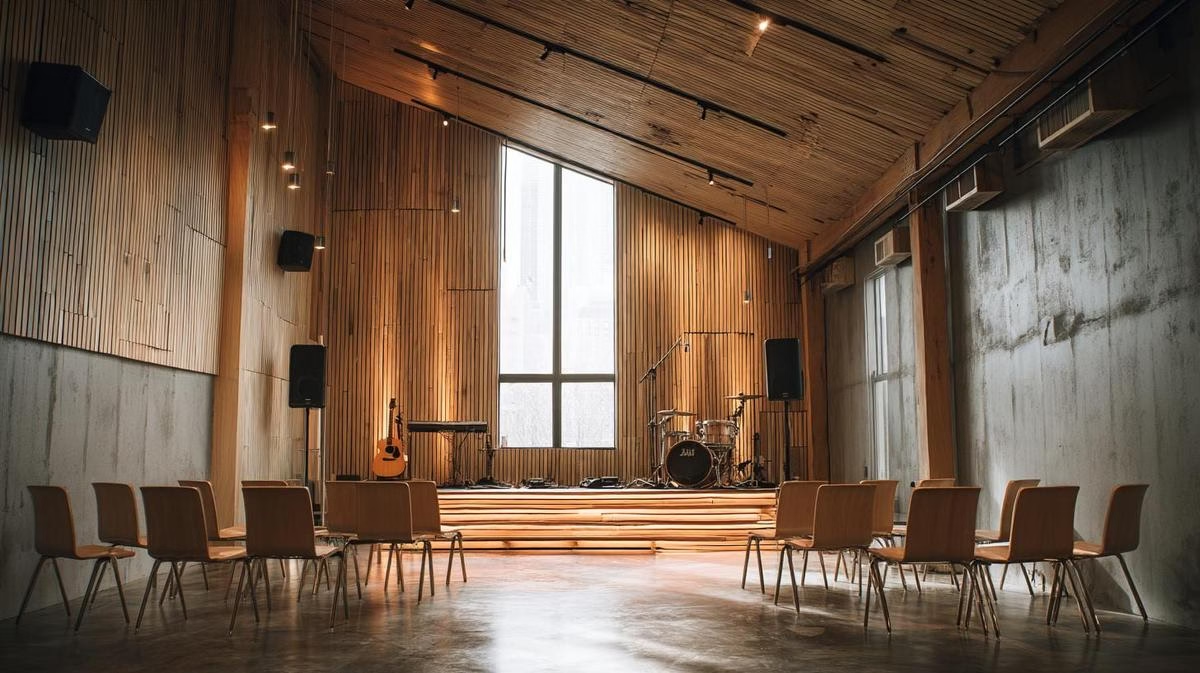
Start with a clap test. Clap once in a few spots around the room. A long, ringing tail means too much reverb; a clap that dies fast means the room is already behaving. Soft panels on back and side walls catch high frequencies and tame low-end boom, but treating a sanctuary isn’t about muffling it into a dead room. Foam, cloth, and slatted wood shape sound. Brick, glass, and bare drywall fight it.
We map bounce zones with modeling software before buying a single panel, because a materials list without a model of how sound moves through the room is a guess dressed up as a plan. For rooms that host more than one kind of event, weddings on Saturday, a full band on Sunday, we’ve specified moving panels and roll-down ceiling baffles so the room’s acoustics change with what’s happening in it. Match panel color and material to the space too; treatment that looks bolted on undercuts a room people are supposed to feel at home in.
Why Do Megachurches Need Line Arrays Instead of Point-Source Speakers?
Line arrays are the standard for large sanctuaries, and there’s a reason for it. Stacking small speaker elements in a vertical line focuses sound forward and down instead of spreading it in every direction. That control is what gets clear sound to the balcony and the back row without also blasting the ceiling.
Point-source speakers spread sound in a wider, less controlled pattern. In a small room, that’s fine. In a sanctuary that seats a few thousand, the spread bounces off hard surfaces and comes back as echo, and clarity is the first casualty.
Delay towers fix the timing problem that comes with distance. Sound from a closer delay speaker reaches the back rows before sound from the front array does, and without correction the two arrive out of sync and smear the mix. We tune each array to the room it’s actually installed in. Skip that step and a soprano section that sounded full at the mix position disappears by row forty, which is usually a phase problem, not a volume problem. The fix is mic placement and speaker angle, not more gain.
How Do You Keep the Room Mix and the Livestream Mix Both Clear?
A megachurch running a livestream needs two mixes, not one. The room mix and the stream mix have different jobs, and treating the stream as an afterthought is how a service that sounds great in the room goes out flat and buried online.
A digital console with saved presets for songs, sermons, and altar calls keeps that from riding on one person’s memory every week. Most volunteer techs aren’t audio engineers, so the console has to be simple enough to run without a manual open beside it. Watch gain staging and mic spacing closely during full-band worship; feedback is the fastest way to lose a room’s attention. A signal flow map showing where every input goes, across every campus if there’s more than one, keeps troubleshooting from turning into guesswork mid-service.
How Do You Design a System That Grows With the Church Instead of Against It?
A system built for exactly what a church needs today gets torn out the day the church needs more. Scalable design means planning zones, routing capacity, and rack space for the expansion that hasn’t happened yet: a second campus feed, a cry room, an overflow space.
That means routing gear with headroom for more inputs, conduit run for cable that doesn’t exist yet, and a support plan that doesn’t leave a volunteer team stuck when something fails on a Sunday morning. Audio system design done this way costs more upfront and less over ten years.
The Short Version
A megachurch sound system comes down to the same five components every time, mixer, speakers, mics, amps, and processing, but how they get specified and tuned separates a system that works from one that just measures loud. Acoustic treatment, line array placement, and a mix built for both the room and the stream matter more than any single piece of gear.
For how this scales into full video and streaming, see megachurch AV and streaming systems, or how we approach AV design for houses of worship generally. If you want a walkthrough of your sanctuary before committing to a design, book a free consultation and we’ll tell you what your room actually needs.