Church & Worship AV
Future-Proofing Your North Georgia Church's Technology
Key Takeaways
- A documented 3-to-5 year technology roadmap prevents the reactive, sale-driven purchases that create a closet of gear nobody can integrate later.
- Modular systems, like a soundboard with expansion slots, cost a little more upfront but avoid a full replacement down the line.
- Cloud-based church management software reduces on-site server maintenance and gives staff one system instead of several that don’t talk to each other.
- Open protocols like Dante let equipment from different manufacturers work together, which matters when you’re buying gear in phases over several years.
- None of this works without a commercial-grade network underneath it. That’s the foundation, not an accessory.
Reactive Buying Builds Tomorrow’s Junk Closet
When a church in Forsyth or Hall County grows fast, the instinct is to patch whatever just broke or buy whatever’s on sale that month. That habit is expensive in a way you don’t see right away: a closet full of gear that can’t talk to the platform you bought two years later. Future-proofing means trading those reactive, emergency purchases for a plan built around where the ministry is actually headed, not just what broke this week.
Build a Roadmap You’ll Actually Use
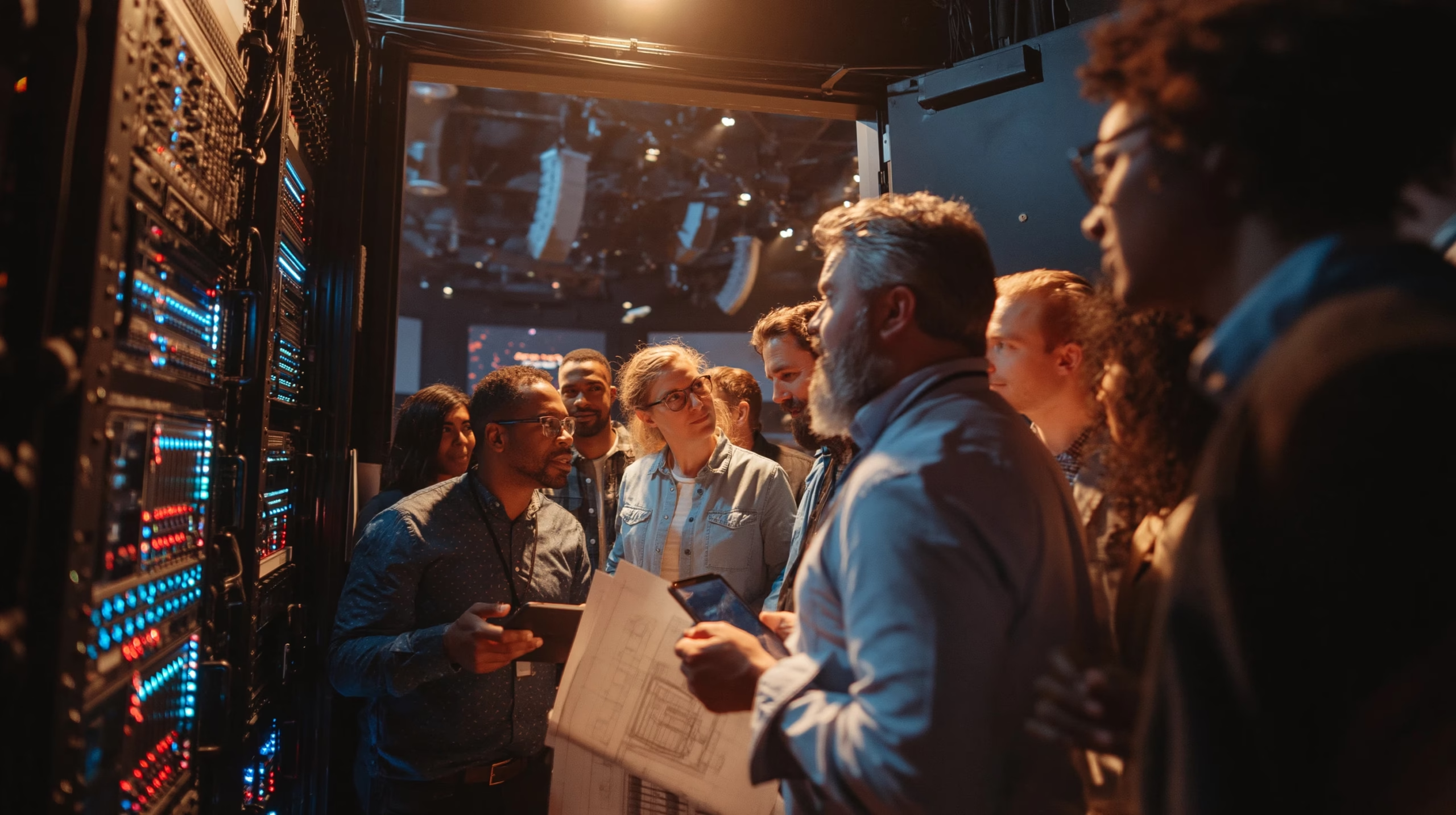
A documented 3-to-5 year roadmap is the foundation of scalable church technology, and it doesn’t need to be complicated. Before buying a new mixing console or a PTZ camera system, ask where the church expects to be in five years. Multi-campus? Bilingual services? A dedicated youth broadcast? Mapping those goals with a local integrator lets you install gear in phases that each build toward the same destination, instead of buying, replacing, and buying again.
Buy Modular, Not Maxed Out
Investing in modular equipment pays off over time. For a growing sanctuary, that means a digital soundboard with room for expansion cards rather than a 64-channel desk you can’t currently fill. It means a lighting control system that can take on new fixtures as the budget allows instead of a fixed setup you’ll outgrow in two years. Open protocols like Dante audio networking keep your options open too, letting gear from different manufacturers talk to each other as your production needs grow.
Move Ministry Data to the Cloud on Purpose
Future-proofing reaches past the sound booth and into how you manage your congregation’s data. Moving from a vulnerable on-site server to cloud-based church management software puts your membership database, children’s ministry check-ins, and online giving on one platform instead of three that don’t sync with each other. Cloud platforms update automatically and typically offer better security for donor data than an aging on-site server, and they free your administrative staff from re-entering the same information across mismatched systems.
The Network Is What Holds All of It Up
None of these tools work if the network underneath them can’t carry the load. As hybrid worship, mobile giving, and digital discipleship tools become standard, bandwidth demand only goes up. The most important single step in future-proofing a campus is dedicated Cat6A cabling and network switches with proper VLAN segmentation, so the livestream doesn’t stall the moment the sanctuary fills up and everyone connects to guest WiFi at once. Our guide to network and WiFi upgrades covers exactly what that build looks like.
If your current gear is closer to the end of its life than the start of a roadmap, our guide to renovating vs. patching an aging AV system walks through how to tell the difference. Book a free consultation and we’ll help you build a plan instead of a wish list.